
Reliable Water Service Makes Everyday Life Easier
Water-treatment equipment often works quietly in the background. You notice it when the water tastes better, mineral deposits become less troublesome, or household appliances run without the same buildup as before. What’s less obvious is the routine care that keeps the system working properly. Filters need attention, softeners require supplies, and equipment occasionally needs professional servicing. Without a practical plan, even a well-chosen system can become less effective over time.
For homeowners and businesses, reliable water service is about more than installing a filter and moving on. It means understanding how the equipment works, keeping up with routine tasks, and knowing who to contact when something changes. A little planning can prevent avoidable inconvenience and help protect the investment made in water treatment.
Why Routine Water-System Care Matters
Water-treatment systems are designed to address particular concerns, such as hardness, sediment, unwanted tastes, or selected contaminants. Their performance depends on the technology used and the condition of the equipment. A filter cartridge, for example, has a limited service life. A water softener may need salt and periodic checks, while other systems require cleaning, sanitation, or replacement components.
Ignoring these needs can lead to reduced performance. You might notice that water pressure has dropped, a familiar taste has returned, or scale is appearing again around faucets. Those signs don’t always mean the entire system has failed, but they are worth investigating.
Start by reading the manufacturer’s instructions and keeping a simple record of service dates. Write down when filters were installed, when supplies were added, and when a technician last inspected the system. It may sound basic, but this small habit makes it easier to recognize when something is overdue.
It also helps to understand what your system is designed to do. A softener primarily addresses hardness; it is not a universal contaminant-removal device. Likewise, a carbon filter may improve certain tastes and odors without addressing every possible water-quality concern. Knowing these limits helps you set realistic expectations and recognize when further testing may be necessary.
Keeping the Right Supplies Available
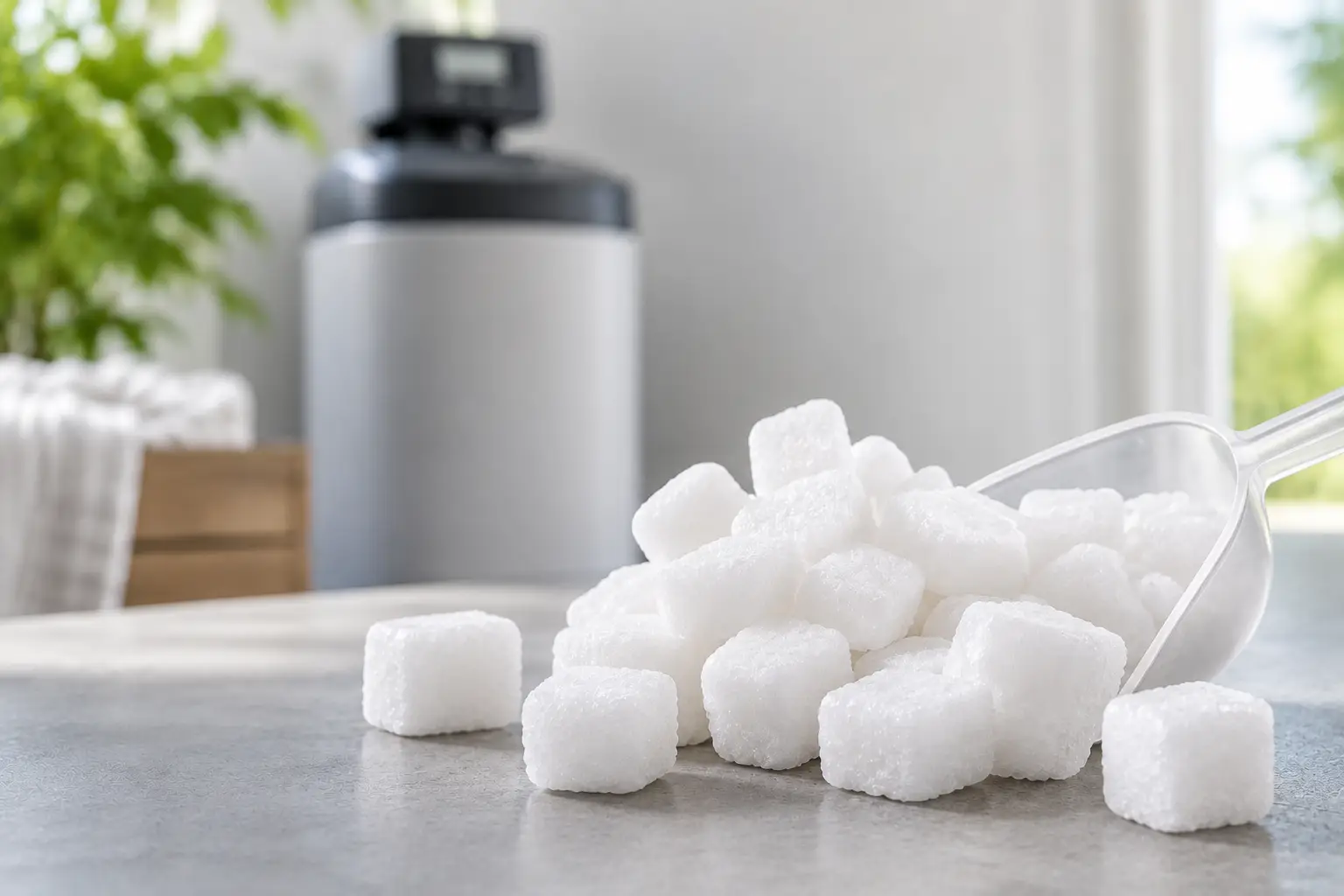
Some treatment systems rely on supplies that need replenishing regularly. Conventional water softeners, for example, commonly use salt during their regeneration process. When the supply runs low, the equipment may not continue operating as expected, and hardness-related symptoms can gradually return.
Arranging salt delivery can make this routine task easier, particularly for households that use a considerable amount of water or have limited time to carry heavy bags. A scheduled delivery may also help prevent the inconvenience of discovering an empty salt tank at the wrong moment.
The amount of salt a softener uses depends on several factors, including water hardness, household demand, the size of the unit, and its settings. Check the salt level periodically rather than assuming that every system follows the same schedule. Follow the manufacturer’s guidance on the appropriate salt type, and avoid filling the tank beyond the recommended level.
It’s also sensible to inspect the brine tank occasionally for unusual buildup or other issues. If salt appears to be present but the system is no longer softening the water properly, adding more may not solve the problem. The unit may need troubleshooting or professional attention.
A reliable supply arrangement should fit the system’s actual needs. There is little value in ordering more than you can store safely, especially if the equipment uses supplies slowly. A simple routine based on consumption is often all that is needed.
When Water Delivery Is Useful
Not every water-related need involves a filtration system connected to household plumbing. Some homes, offices, and workplaces prefer delivered drinking water for convenience, while others may need a temporary supply during renovations or equipment repairs.
A dependable water delivery service can help keep drinking water available without requiring someone to make repeated trips to the store. This can be useful in busy offices, shared workspaces, or homes where several people rely on a consistent supply throughout the week.
Before arranging delivery, consider how much water is normally used and where containers will be stored. A small household may need only occasional deliveries, while a larger workplace might benefit from a more regular schedule. Storage areas should remain clean, cool, and protected from direct sunlight where appropriate. Containers and dispensers also need routine cleaning according to the supplier’s instructions.
It is worth checking the details of the service before committing. Ask about delivery frequency, container handling, minimum order quantities, and how changes to the schedule are managed. Clear expectations help avoid running short or receiving more water than the available space can accommodate.
Delivered drinking water and a home’s treatment system serve different purposes. A delivery service may provide convenient drinking water, but it does not replace the need to investigate problems affecting the property’s plumbing or water supply. If tap water develops a sudden change in color, smell, or appearance, identify the cause rather than assuming that bottled or delivered water resolves the underlying issue.
Professional Service Can Prevent Bigger Problems
Routine maintenance can handle many ordinary tasks, but some issues require a trained technician. Unusual noises, persistent leaks, recurring scale, unexplained pressure changes, or equipment that repeatedly displays an error should not be ignored.
Professional service & maintenance can include checking system settings, inspecting connections, evaluating performance, replacing worn components, and confirming that equipment is operating according to its specifications. The exact work depends on the system and the problem being addressed.
A useful service visit should provide more than a quick adjustment. Ask the technician to explain what was checked, whether any parts need replacing, and what signs you should watch for afterward. If the issue relates to water quality, ask whether testing is recommended to confirm that the system is still achieving its intended result.
Keep service records in one place, along with product manuals, warranty information, and installation details. This can save time when arranging repairs or ordering replacement parts. It also helps a new technician understand the equipment’s history if you change providers.
For businesses, planned maintenance can be especially valuable. A system failure may interrupt normal operations, affect water availability, or create scheduling problems. Arranging inspections during quieter periods can reduce disruption, although the maintenance schedule should always follow the equipment manufacturer’s requirements and the demands of the facility.
Know When Water Testing Is Needed
Maintenance and water testing are related, but they are not the same thing. A technician may confirm that a filter is installed correctly, yet that alone does not prove the water is free from every unwanted substance. Testing needs depend on the water source, the treatment equipment, and any concerns that have developed.
For private wells, periodic testing is particularly important because conditions can change over time. Municipal water customers can review their supplier’s water-quality information and investigate any specific concern that arises at the property. If there is a sudden change in taste, color, or odor, contact the appropriate water provider or a qualified professional to determine the next step.
Use a testing method suitable for the substance being investigated. A basic hardness test cannot confirm the absence of bacteria or other health-related contaminants. Where appropriate, certified laboratory testing provides more dependable information.
Once results are available, compare them with earlier records. Changes may indicate that the water source has shifted, the treatment system needs attention, or further investigation is necessary. This approach helps you make decisions based on evidence rather than guesswork.
Build a Routine That Works for You
Good water service does not need to become another complicated household chore. Set reminders for filter changes, check supply levels, and arrange inspections according to the manufacturer’s recommendations. If you use a delivery service, choose a schedule that matches actual consumption rather than ordering by habit.
The same approach works for businesses. Assign responsibility for checking supplies, recording service dates, and reporting unusual changes. When everyone knows what to look for, small issues are less likely to go unnoticed.
Most importantly, treat maintenance as part of owning the equipment, not an unexpected expense. Replacement filters, salt, servicing, and occasional testing all contribute to the system’s long-term cost. Understanding these requirements before installation makes budgeting easier and helps avoid unpleasant surprises.
Dependable Water Service Starts With Small Steps
A water-treatment system should make daily life easier, not leave you wondering whether it is still doing its job. Regular care, suitable supplies, reliable delivery when needed, and timely professional support all help keep the overall setup manageable.
Take time to understand your equipment, follow its maintenance instructions, and investigate changes instead of ignoring them. With a practical routine and clear service arrangements, you can support consistent performance and enjoy greater confidence in the water your household or business uses every day.
Related reading

Making Sense of Your Home’s Water and Choosing the Right Treatment
Water is one of those everyday necessities that rarely gets much attention until it starts causing trouble. Perhaps the shower screen keeps collecting white marks, your kettle develops…
Read the article →
Better Water at Home Starts With Understanding What Comes From Your Tap
Water is one of those things most of us take for granted. Turn on the kitchen faucet, fill a glass, start the washing machine, or step into the…
Read the article →
The Quiet Difference Better Water Can Make in Your Home
Most home upgrades are easy to see. New flooring, fresh paint, better lighting, a nicer kitchen faucet — they all announce themselves. Water, on the other hand, is…
Read the article →